Although there are many sentient beings in this world,
They equally reject even a speck of suffering,
And equally wish for even a pinpoint of happiness.
Therefore, cultivate lovingkindness and compassion for all.
—Dakini Mumtso
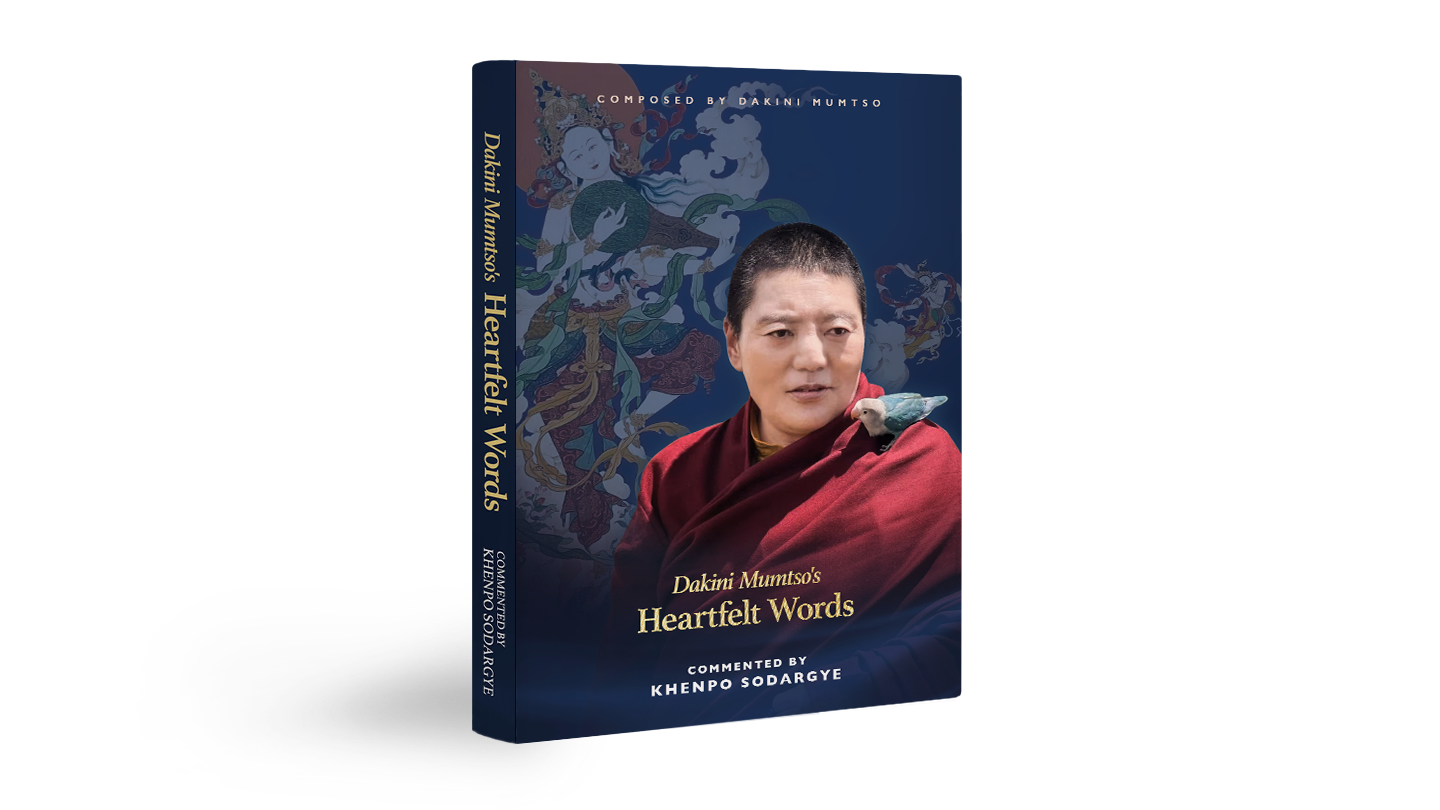
Dakini Mumtso’s Heartfelt Words gathers three precious teachings by this great contemporary master, each illuminated by the patient and insightful commentary of Khenpo Sodargye Rinpoche. The collection includes The Melody of the White Dharma Conch, written for her Han Chinese disciples; Words to Devout Laymen and Laywomen, providing tender guidance for daily life; and Guidance That Lights the Way to Liberation, a path extending from ethical discipline to the heart essence of Dzogchen. Together, these works read less like a formal treatise and more like a letter from a mother who, having watched over her children for decades, now shares with unhurried love all that they need to know.
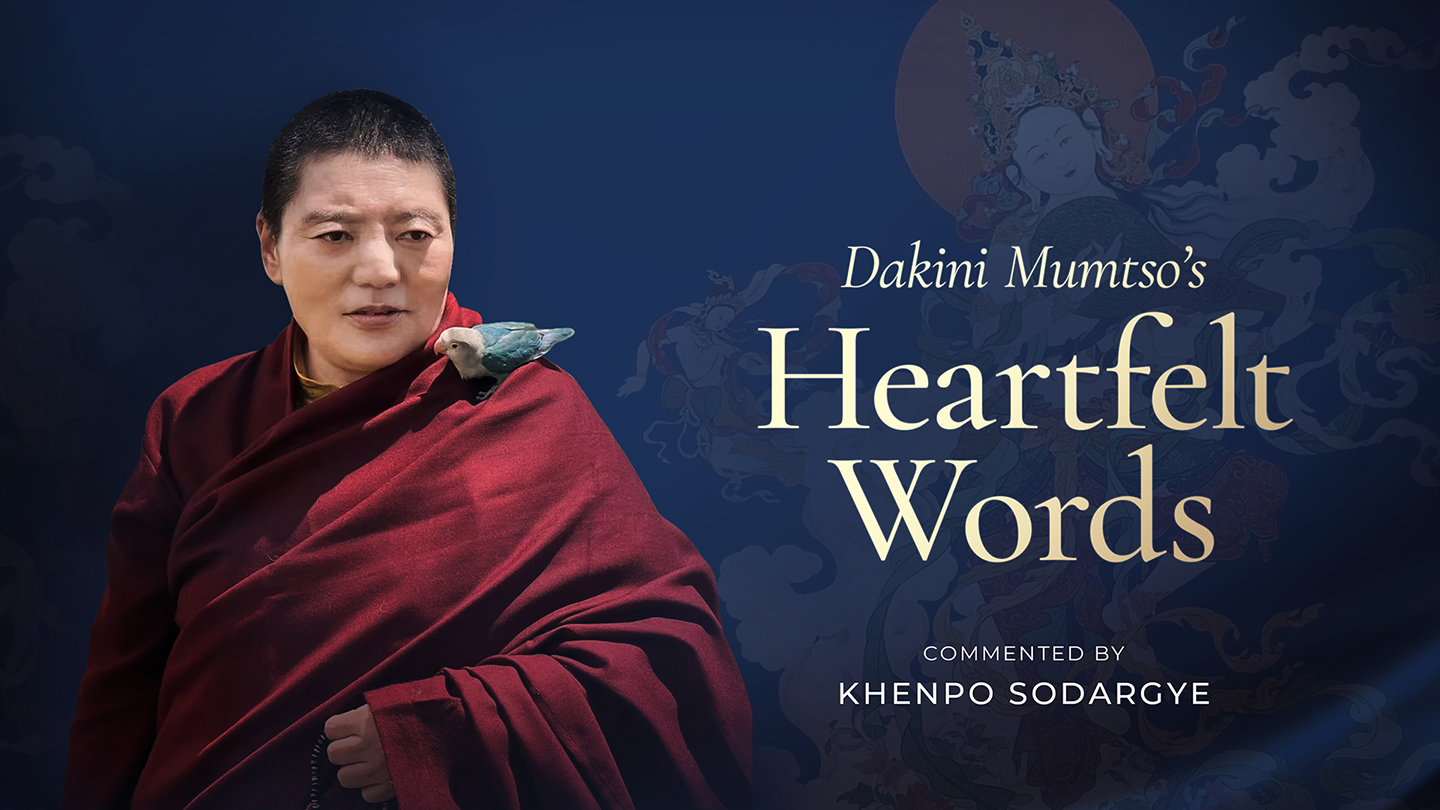
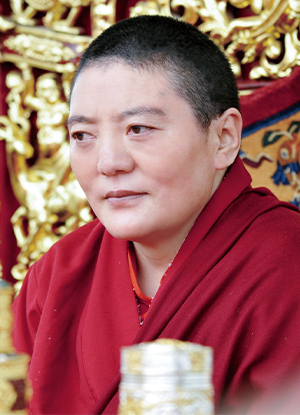
Dakini Mumtso—recognized as the reincarnation of Jetsün Mingyur Paldrön of Mindrolling Monastery—is the niece and closest lifelong disciple of His Holiness Jigme Phuntsok Rinpoche, and is widely regarded as one of the foremost female masters of our time. Since childhood, she has recited mantras without interruption, and her total now exceeds one billion. She remained at His Holiness’s side from birth until his parinirvana and received the complete transmission of his teachings, sutra and tantra alike—a level of completeness not bestowed on any other living disciple. Those who have known her for decades attest that they have never once seen her lose her temper, which, as Khenpo Sodargye Rinpoche remarked, is beyond imagination to those who have not witnessed it.
This volume brings together three of her teachings, composed at different times over the past three decades and published here together for the first time: The Melody of the White Dharma Conch, written for her Han Chinese disciples; Words to Devout Laymen and Laywomen, composed for lay practitioners in the Land of Snows; and Guidance That Lights the Way to Liberation, delivered to the monastic sangha of Mindrolling. Each text is accompanied by a detailed commentary by Khenpo Rinpoche, who has been close to Lama Mumtso since 1985.
Though concise, these three works together present a complete arc of practice: from the fundamentals of relating well to others and observing cause and effect, to cultivating faith, compassion, and renunciation; from ethical discipline and study to reflection; and, finally, to the direct recognition of the nature of mind in Dzogchen. In his commentary, Khenpo Rinpoche draws not only on the teachings of Sutrayana and Vajrayana, but also on his own experience—empowerments he witnessed her confer, journeys they shared with His Holiness, and episodes from her biography, White Lotus (which he also translated)—to explain each passage in a way that contemporary readers can readily approach.
His Holiness has passed on, and the great masters who guided an entire generation are, one by one, entering their later years. For those who seek to carry the lineage forward, the words left by a teacher like Dakini Mumtso are of uncommon value. These are not offered as historical interest, but as practical guidance: how to conduct oneself with decency, how to soften pride, how to face death without fear, and how to sustain faith when circumstances make it difficult.
As Khenpo Rinpoche has said plainly in his teachings, moving as it may be to meet her in person, what matters most is to receive her instructions and make their meaning one’s own. May all who read this book form a genuine connection with Lama Mumtso, take her guidance to heart, and proceed steadily along the path she illuminates here.
Although there are many sentient beings in this world,
They equally reject even a speck of suffering,
And equally wish for even a pinpoint of happiness.
Therefore, cultivate lovingkindness and compassion for all.
—Dakini Mumtso
For female practitioners in particular, she serves as an exemplary model. Today there are many female Buddhist devotees and monastics worldwide, and in many ways Lama Mumtso stands as their representative, symbol, and role model.
—Khenpo Sodargye
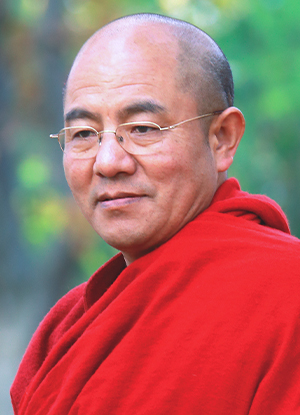
Among the living disciples of His Holiness, she is the most learned. Choje Yidzhin Norbu—her uncle—had been instructing her since she was under ten years old, even during the Cultural Revolution when Buddhism was highly restricted. While we missed those early years, she received the teachings in their entirety.
—Khenpo Sodargye
Although death cannot be avoided,
If, as the great masters of the past have done,
We recognize the appearances of birth and death as dreamlike,
This becomes a skillful means for freedom from suffering.